Briefly |
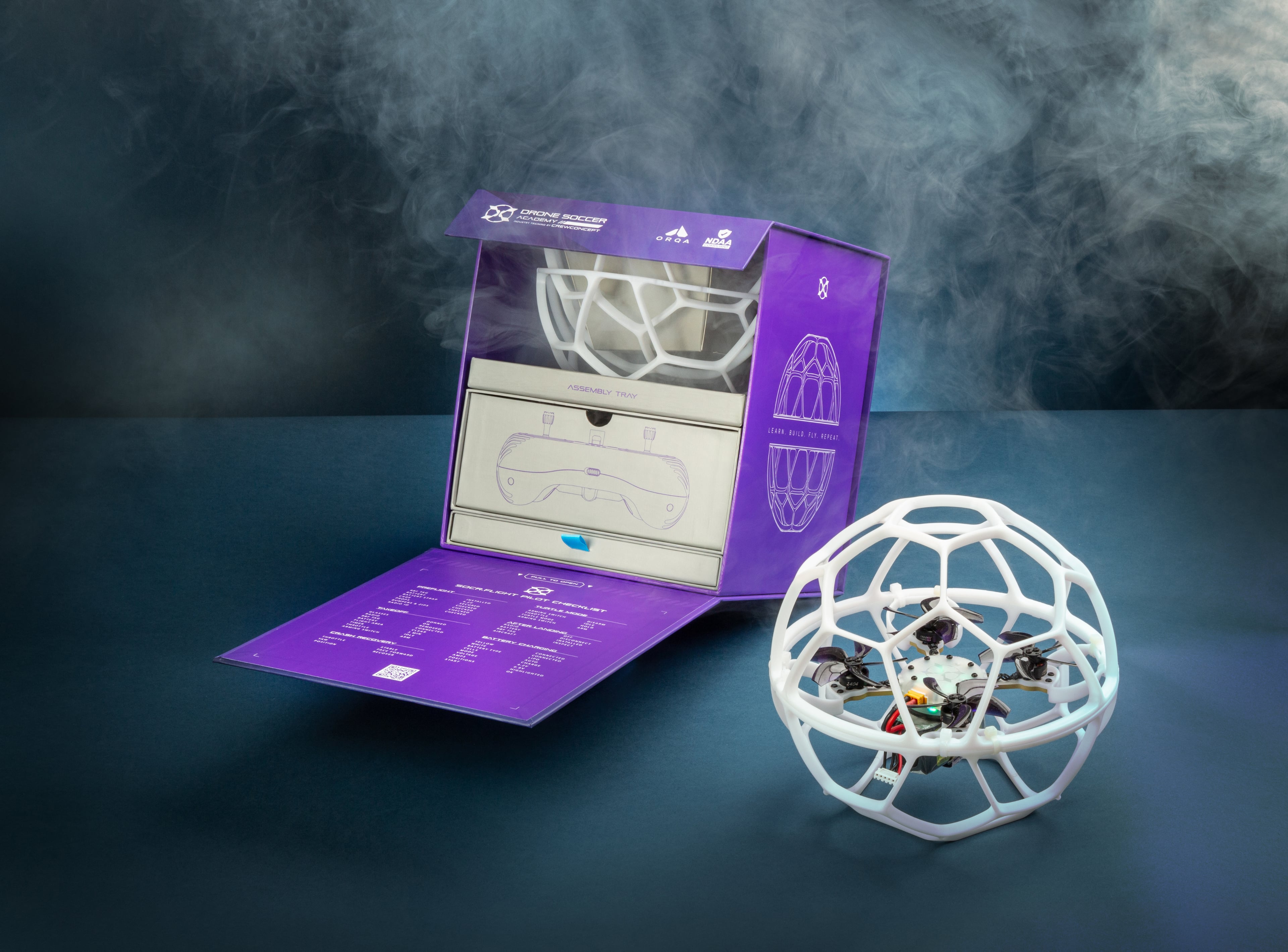
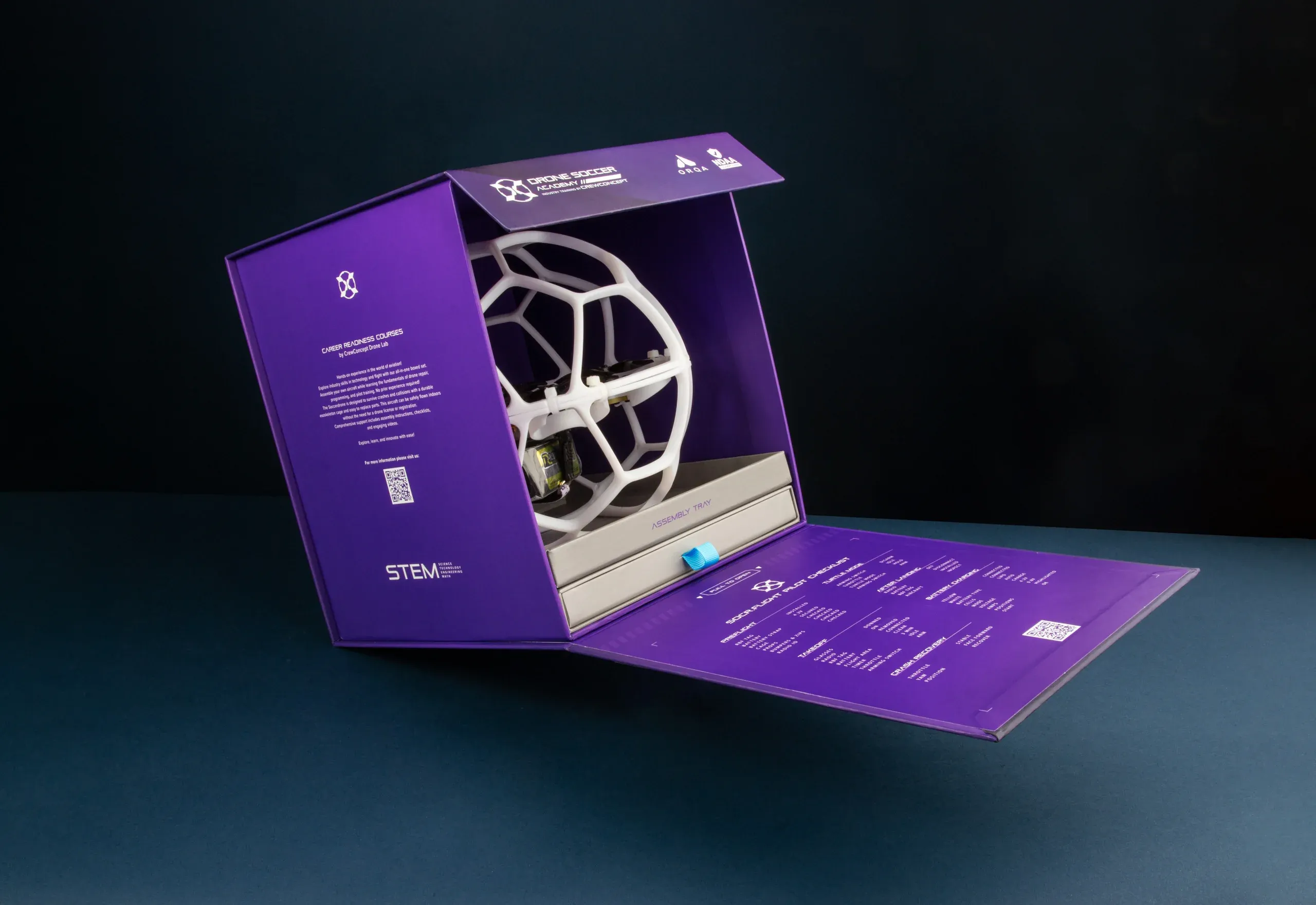
The Soccer Drone educational kit packaging was created for Crew Concept’s Drone Soccer Academy, an initiative combining STEM education with the emerging sport of drone soccer. The modular, durable and reusable system houses drones, controllers, a protective drone ball, tools and learning materials. Designed for classrooms and competitions alike, it balances secure protection, intuitive organization and engaging presentation for both teachers and students.
Packaging can be used for shipping & storage
Chapter 1 |
CONTEXT & PROBLEM
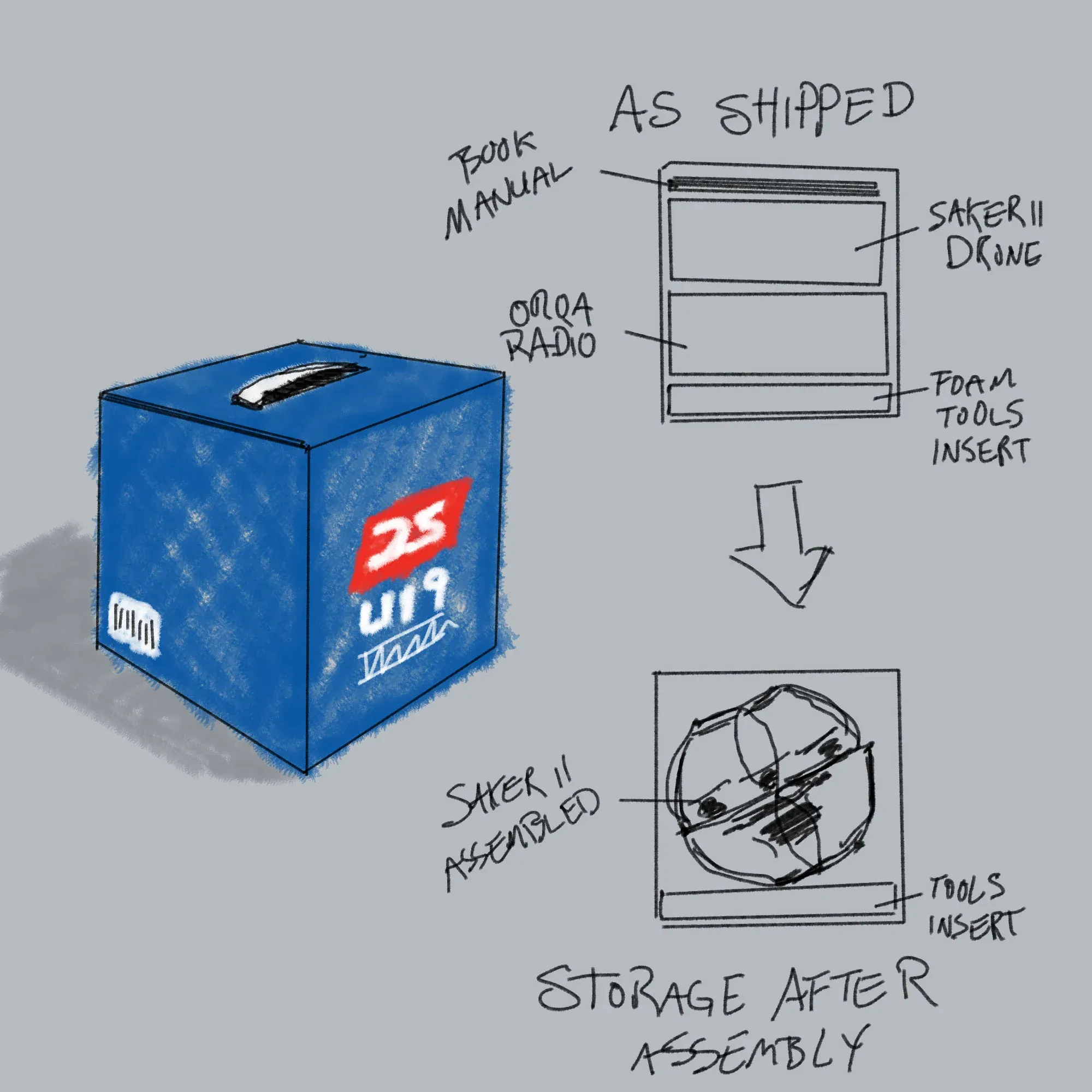
Educational kits for technical subjects must protect fragile components while remaining clear and manageable for repeated use. In drone soccer, parts had to be shipped unassembled for safety, yet the same packaging also had to hold assembled drones for long-term reuse. Existing systems rarely support this transition, which leads to disorganized storage, damaged parts and avoidable waste. Crew Concept needed a functional, durable and creative solution.
Chapter 2 |
OPPORTUNITY & SOLUTION
Opportunity: The Soccer Drone kit sets a new benchmark for educational aerospace packaging by supporting teaching and simplifying classroom management. It connects logistics with hands-on learning and helps make drone soccer accessible and inspiring.
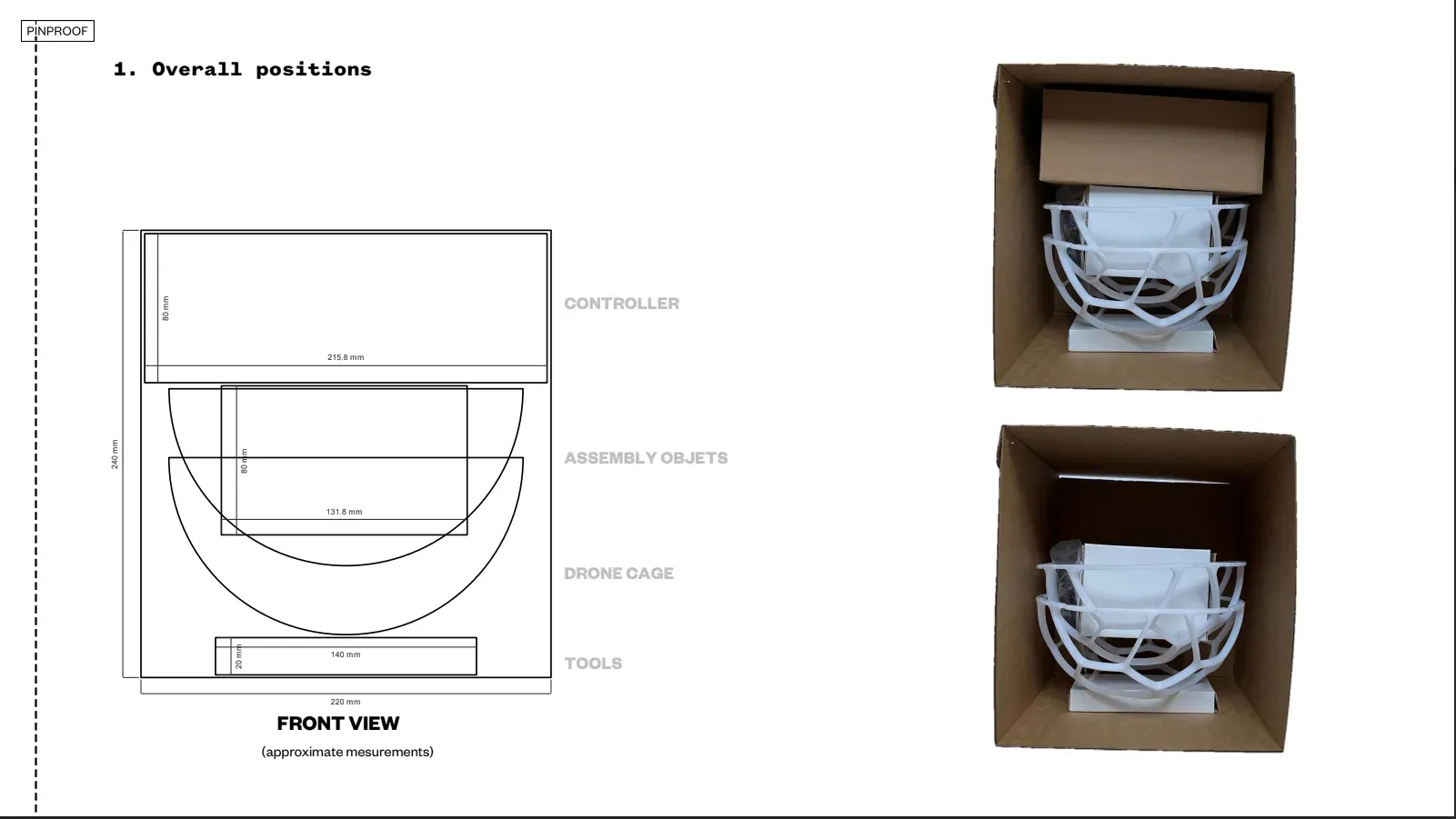
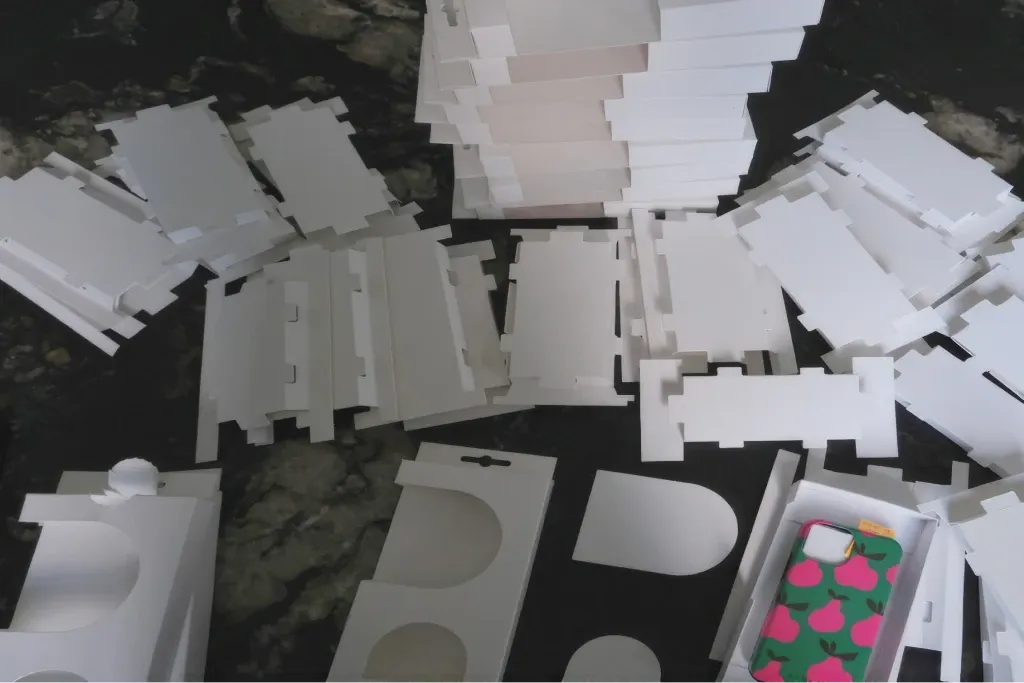
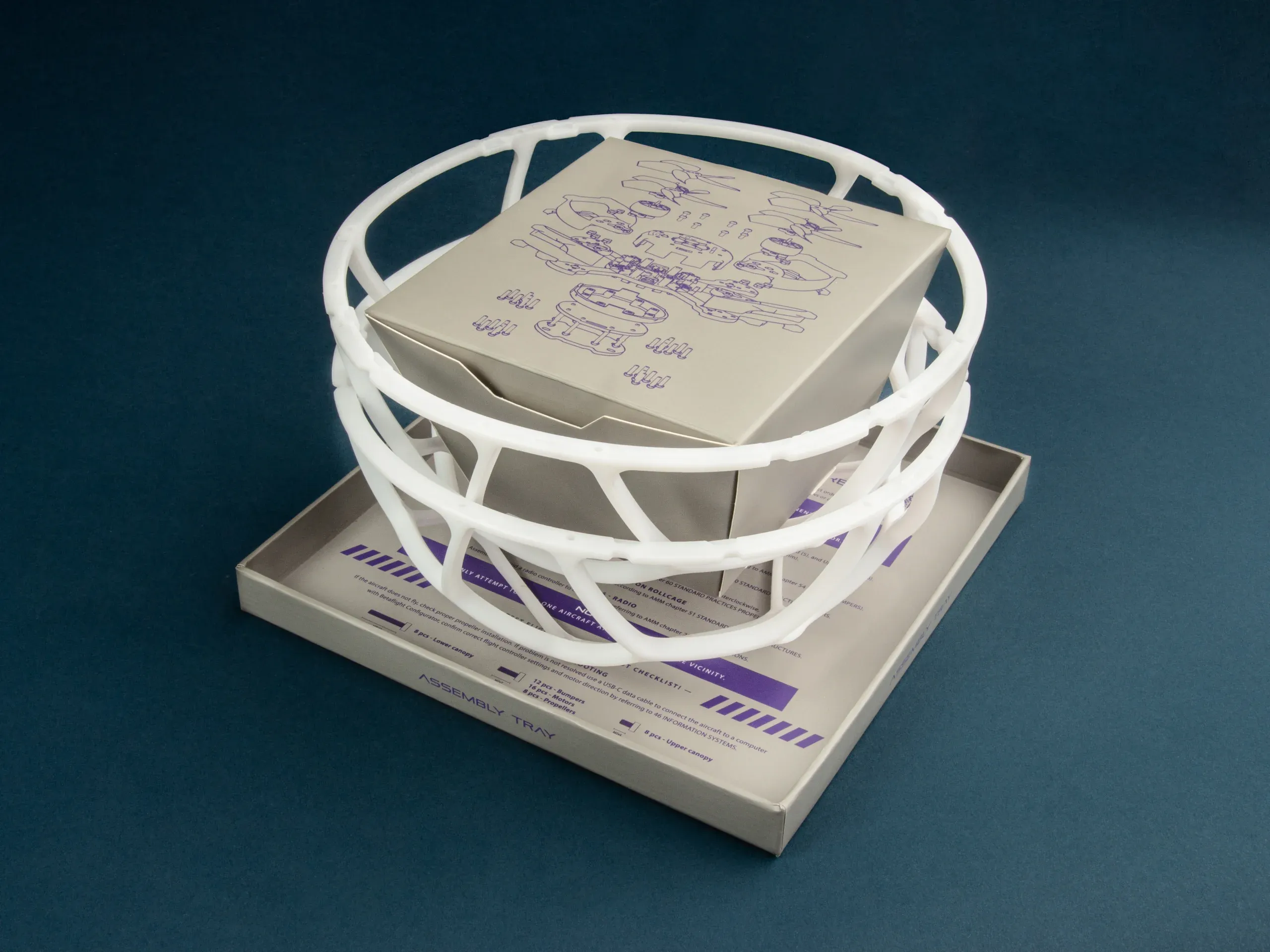
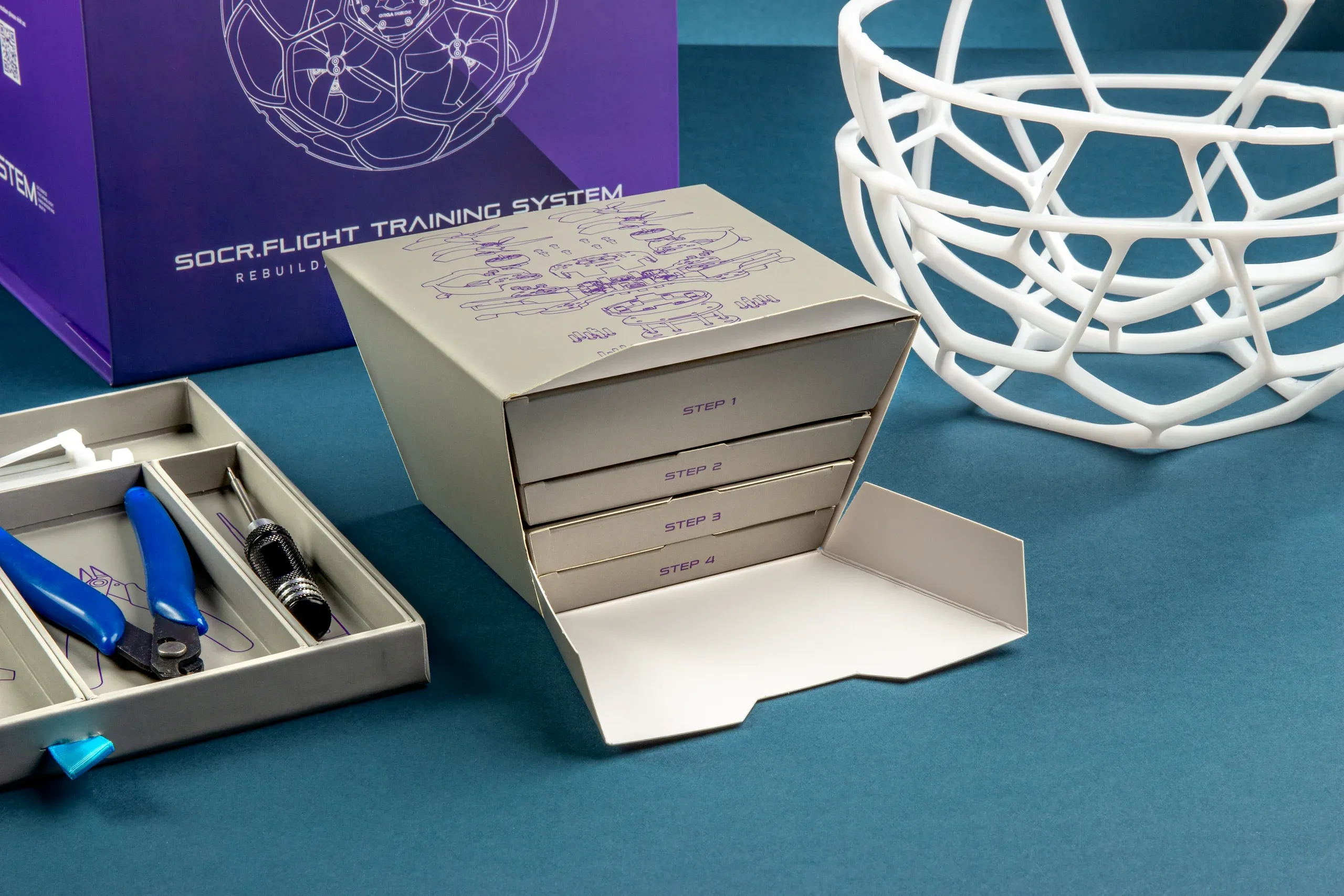
Solution: A sturdy outer box anchors a modular system of engineered internal structures. Precision drawers give every tool and component a dedicated slot, while a simple tray first serves as an assembly surface and then flips to create room for the built drone. Smaller boxes fit inside the two half-spheres of the protective drone ball, maximizing space without losing the distinctive form. Durable matte surfaces and clear graphic cues make the system equally effective for storage, daily lessons and transport to events.
Chapter 3 |
UNBOXING EXPERIENCE
The unboxing follows a classroom-friendly sequence. Every element is packed separately, labelled and paired with printed instructions so students unpack in the correct assembly order. The segmented flow prevents confusion, encourages careful handling and gives students a clear sense of progress while teachers can guide assembly and repacking with ease.
Chapter 4 |
SUSTAINABILITY & FINANCIAL BENEFITS
Sustainability results: Material choices follow the expected lifespan of each part. Rigid board gives reusable boxes strength and recyclability; first-assembly components use lighter recyclable cardboard; lamination appears only where frequent classroom handling requires extra durability. The result balances responsible disposal with long-term use.
Financial benefits: Standard materials and manufacturing methods keep the sophisticated system affordable at scale. Its modular construction allows individual parts to be replaced without discarding the full kit, while optimized dimensions reduce shipping, storage and secondary-packaging costs.
The system is both resilient & resource-conscious

 hello@pinproof.com
 Linkedin | PinProof
 pinproof_packaging