
Briefly |
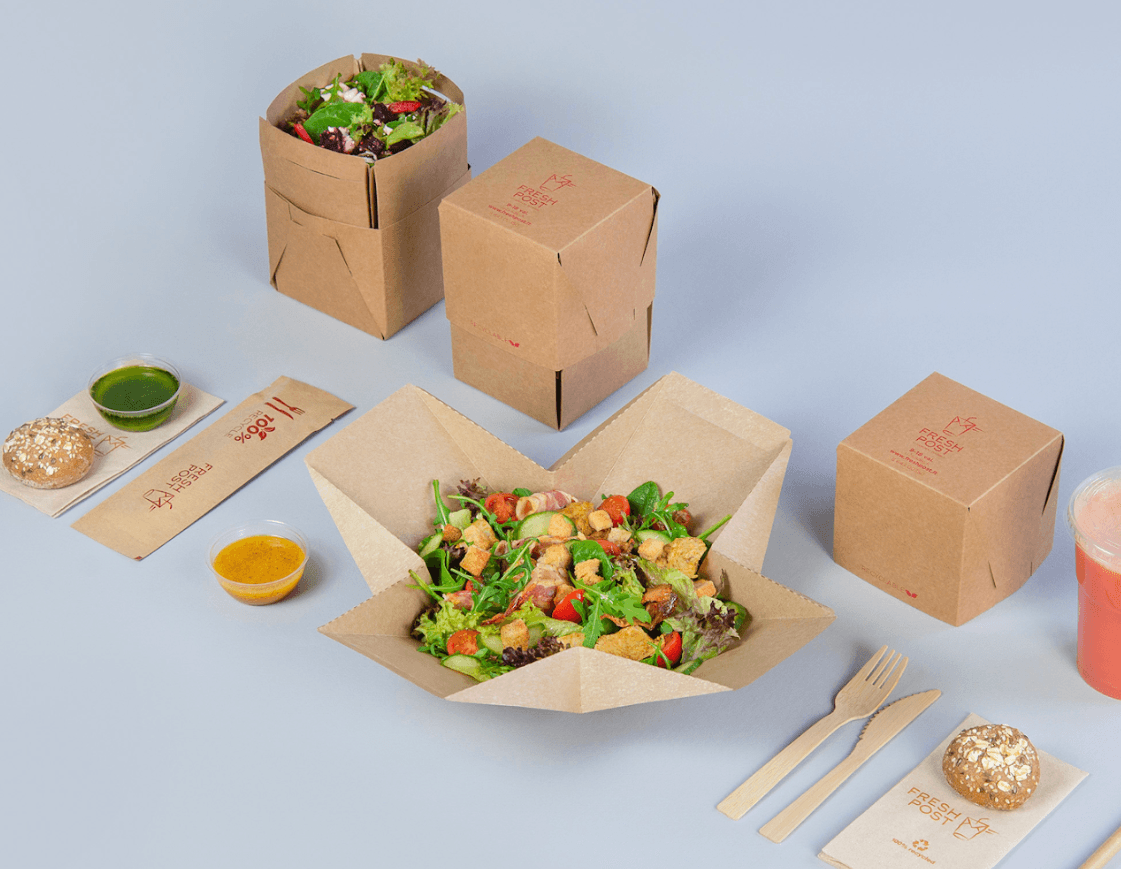
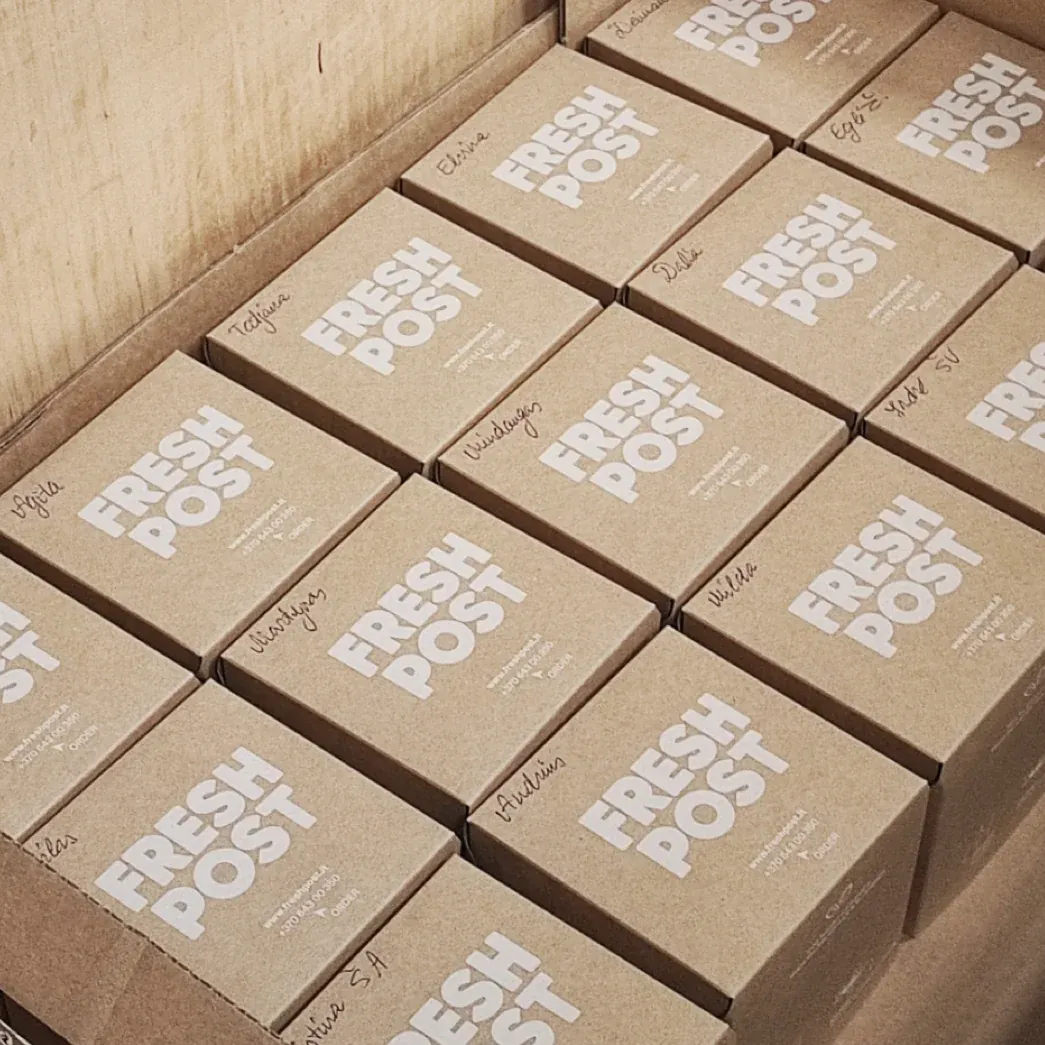
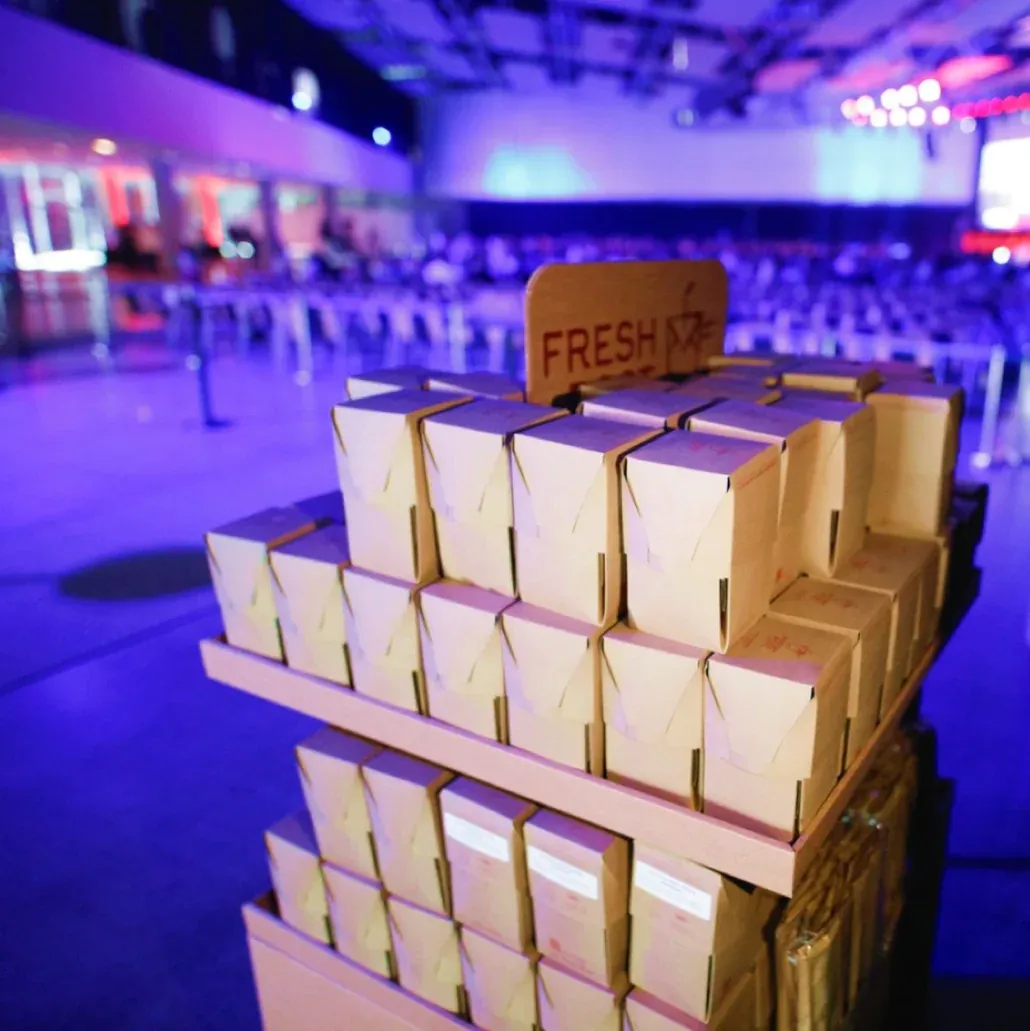
Fresh Post is a Lithuanian takeaway salad and green-cocktail bar founded in 2017. Its loyal urban customers value balanced food, speed and transparency, creating the right setting for a packaging and education system grounded in real recycling infrastructure.
Chapter 1 |
CONTEXT & PROBLEM
Packaging described as recyclable often fails in real waste streams when food contamination or plastic film prevents processing. By studying years of customer feedback and working directly with waste managers, we mapped what happens to each material after use and identified the practical barriers that certificates alone do not solve.
Chapter 2 |
OPPORTUNITY & SOLUTION
Opportunity: A smaller restaurant chain can implement bold material changes much faster than global franchises. Acting now creates a visible leadership position and a stronger base for expanding the Fresh Post franchise.
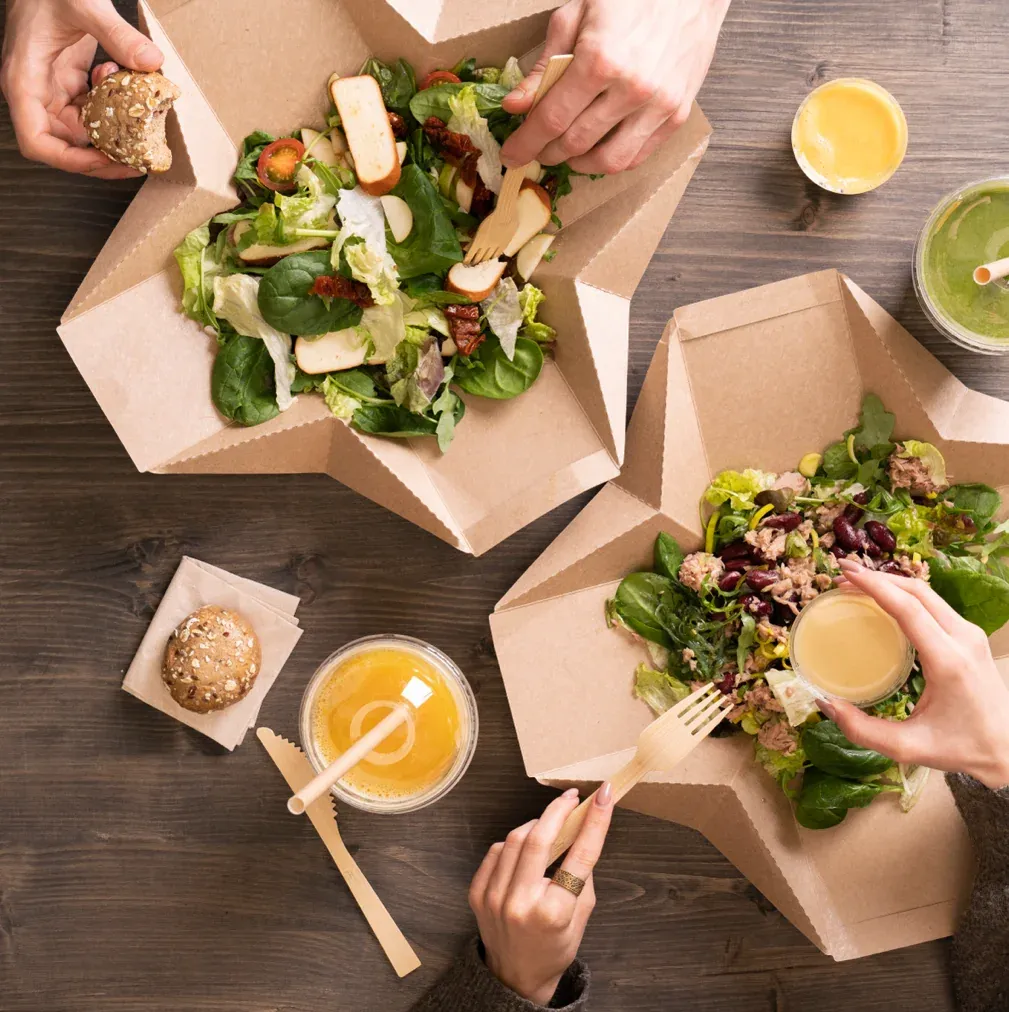
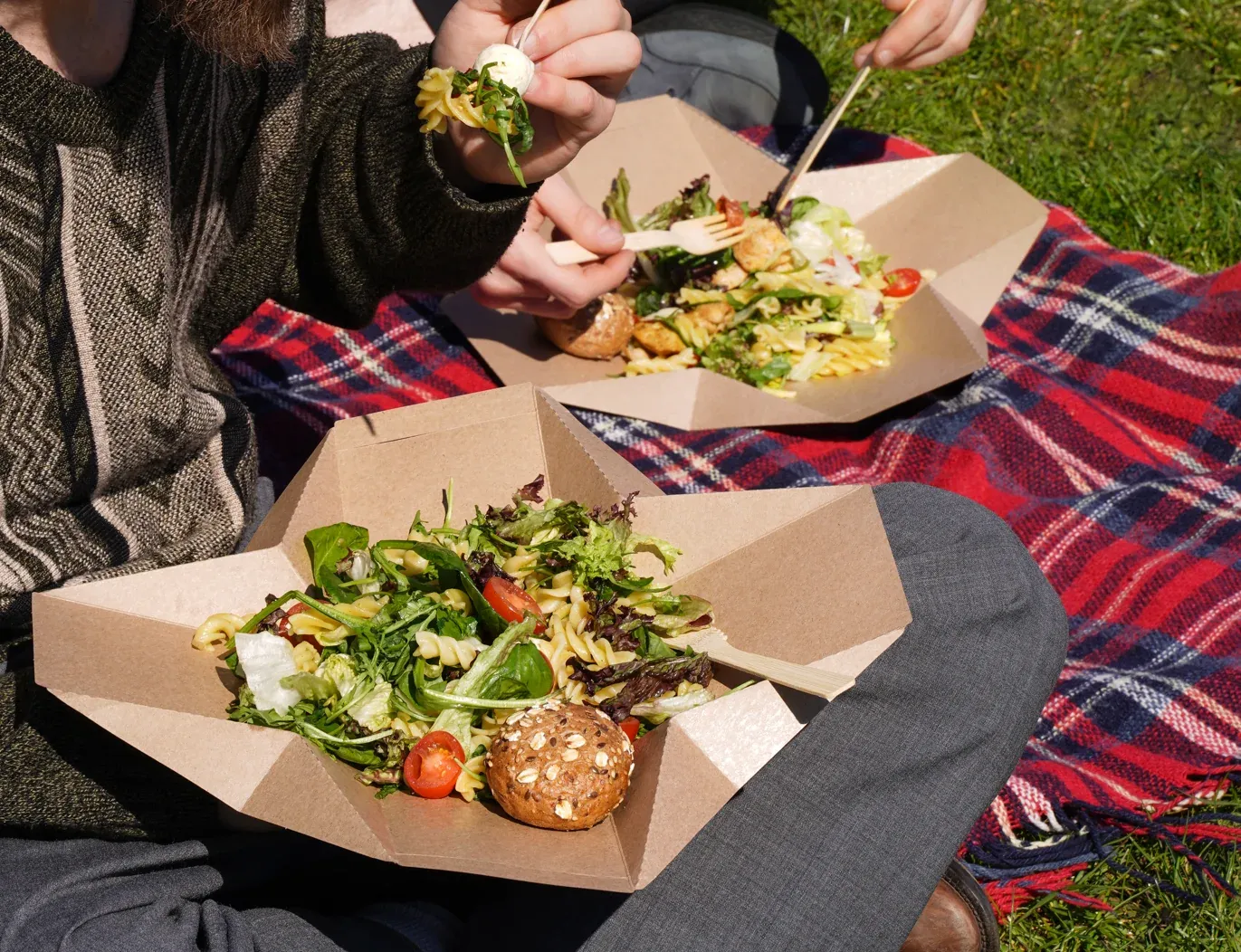
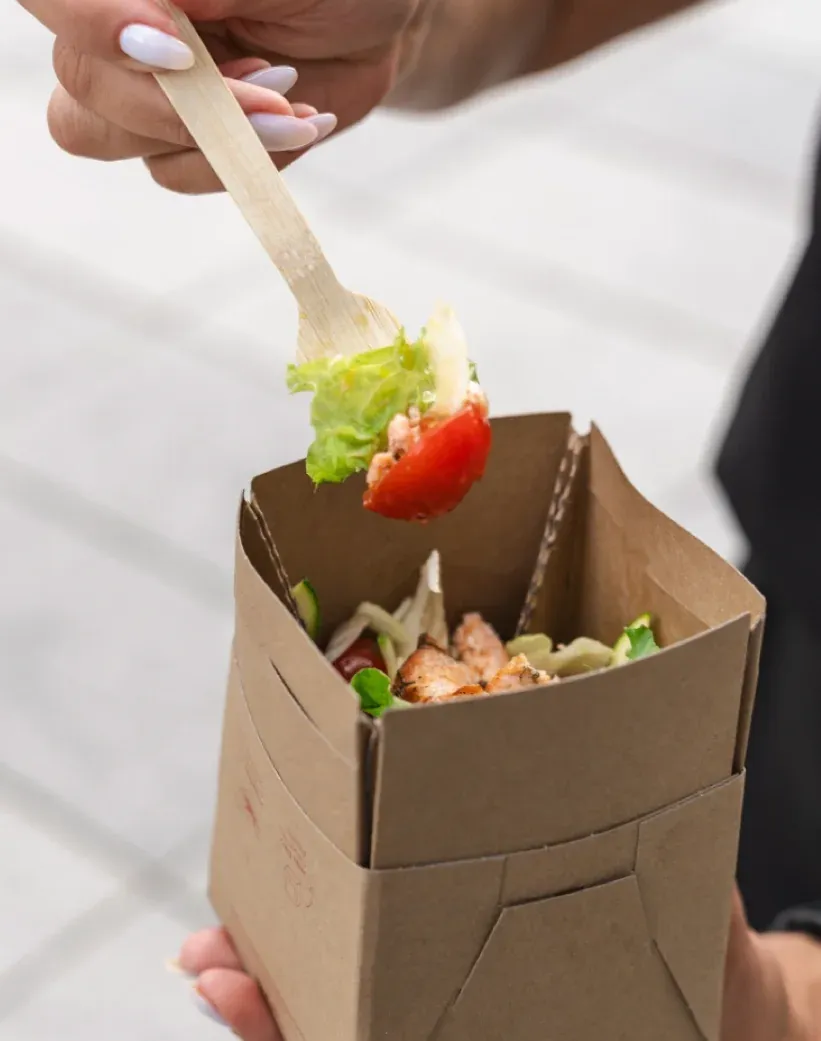
Solution: Together with Smurfit Kappa, we developed a recycled mono-material with moisture and grease resistance created by nine recycled-fiber layers and a foil-free water-based barrier. Activated carbon helps control contaminants. No adhesives and minimal ink simplify recycling, while the food-contact layer is prepared for future composting infrastructure.
Chapter 3 |
CUSTOMER EDUCATION
Innovation only works when people know how to sort it. Research with Ecoservice informed clear QR-based guidance in restaurants, online and directly on the package. Customers can see where each material goes, what it becomes, and how their behavior supports a functioning circular system.
Chapter 4 |
SUSTAINABILITY & FINANCIAL RESULTS
Sustainability results: The system can recycle 20 more tons of material annually, save 98 tons of virgin fiber, reduce electricity use by 1,300 kWh and lower water consumption by 1.5 million liters.
Financial benefits: Optimization reduced total costs by 24%. New materials saved 27%, and the revised structure is expected to lower packaging taxes by 34%.

 hello@pinproof.com
 Linkedin | PinProof
 pinproof_packaging